

On August 26, the GreenDigitalConnectzw WhatsApp Discussion featured Cinderella Ndlovu, the Founder and Director of Green Hut, a youth-led environmental nonprofit based in Bulawayo, Zimbabwe. The session focused on empowering communities to confront climate change through innovative mitigation and adaptation efforts, highlighting the pivotal role of youth in these initiatives.
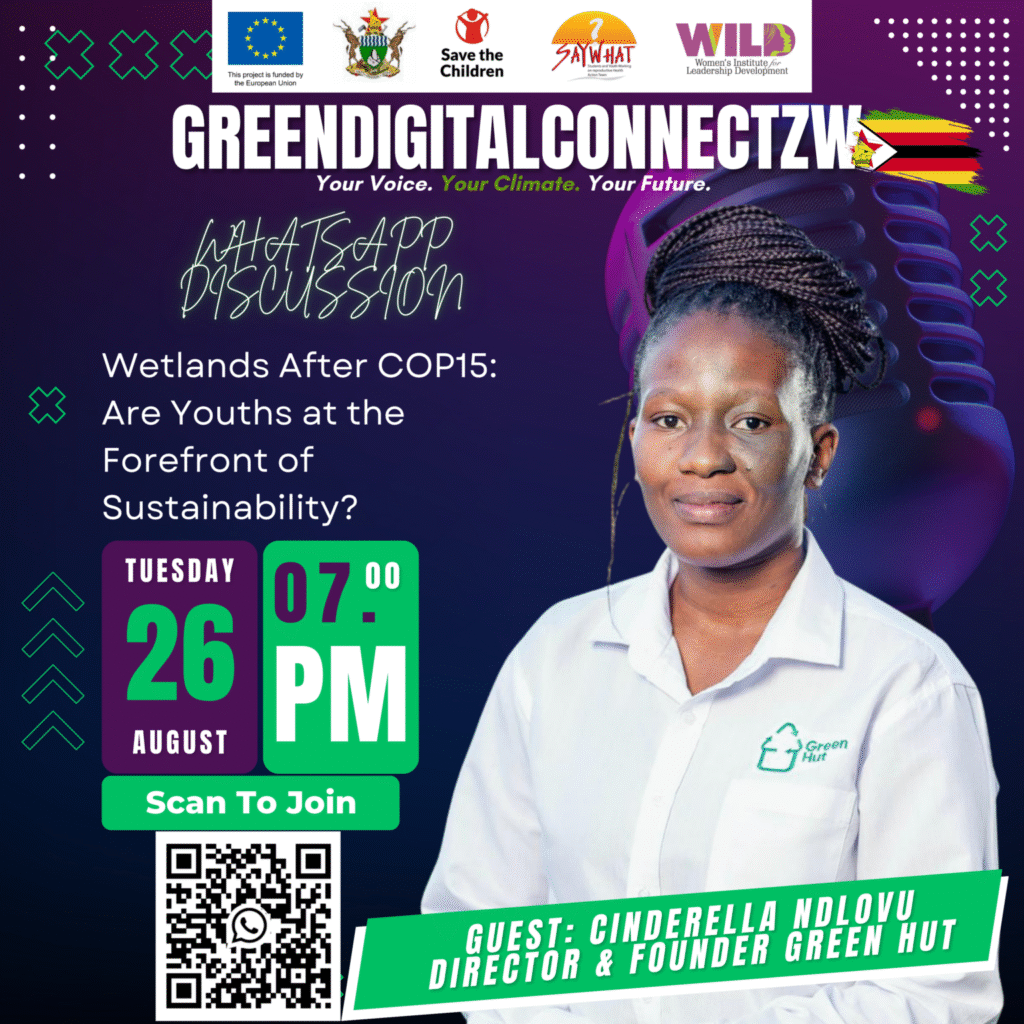
Cinderella shared her inspiring journey from student to environmental advocate. After graduating from Lupane State University, she struggled to find employment despite numerous applications. Driven by her passion for environmental issues, she launched Green Hut during the COVID-19 pandemic, initially establishing a Twitter account to raise awareness. Her online presence quickly garnered attention, leading to her organization’s first project a consultation for the post-2020 global biodiversity framework. This early success demonstrated the power of grassroots movements fueled by social media.
During the discussion, Cinderella emphasized the crucial role of young people in environmental stewardship.
“When we talk about the future, we must include youth,” she stated, reinforcing that sustainable decisions must engage the next generation. Her recommendations for involving young people in climate action included:
- Active Participation: Young people should be seen as agents of change, not just passive participants.
- Capacity Building: They need support in skills, knowledge, and funding to implement their ideas effectively.
- Community Awareness: Young people are conscious of the environmental challenges around them and are eager to contribute solutions.
Cinderella also highlighted the importance of education and continuous learning. She encouraged young people to empower themselves with knowledge about environmental issues and to stay informed about local challenges.
“Researching and understanding our community’s needs will help us advocate more effectively,” she noted.
Participants in the discussion sought advice on how young people can gain support for wetlands restoration and conservation initiatives. Cinderella highlighted the importance of persistence, collaboration, and building expertise.
“We just have to keep knocking on those doors until they are open,” she remarked, emphasizing that successful advocacy requires resilience. She noted that partnering with other organizations can amplify impact and open doors to funding opportunities, allowing for greater community outreach and education.
In response to questions about lessons from successful youth-led initiatives worldwide, Cinderella encouraged Zimbabwean youth to apply for substantial grants and develop sustainability plans for their projects. She stressed the importance of community engagement and documenting efforts to raise awareness and support for local conservation initiatives.
“Working closely with our communities is essential for conserving our wetlands,” she added.
Cinderella concluded by urging young leaders to focus on their unique strengths and to be proactive in seeking out resources.
“Let’s apply ourselves, apply for those big grants, and improve our fundraising strategies so we don’t rely solely on donors,” she stated.
Cinderella’s insights underscored the potential of young leaders in the environmental sector. By fostering knowledge and collaboration, Green Hut aims to inspire a new generation to take action against climate change and protect vital ecosystems for future generations. With a vision rooted in community empowerment, Cinderella’s efforts exemplify the transformative power of youth-led initiatives in the fight against environmental degradation.
GreenDigitalConnectzw originates from the Youth Collective Action for Social Transformation (YCA4SOTRA) Project, implemented by Women’s Institute for Leadership Development (WILD) in collaboration with SAYWHAT and Save the Children, and funded by the European Union.